 Customer portals
 Contact us
Secure FuelEU Maritime compliance through pooling
Are you a shipowner or Document Of Compliance holder worried about meeting the demands of the FuelEU Maritime directive? Gasum’s reliable, fail-safe pooling solution offers a way to achieve compliance, save on costs, and transition smoothly to more predictable and sustainable maritime operations – with a trusted, state-owned partner covering the full value chain. Unlike most FuelEU pools, Gasum guarantees compliance unit availability from its own bio-LNG value chain and assumes full pool balance liability.
FuelEU Maritime directive aims to reduce greenhouse gas emissions in the maritime sector by promoting the use of renewable and low-carbon fuels. The pooling mechanism provides flexibility for shipowners and charterers in achieving compliance cost-efficiently.
Gasum’s commercial pool combines vessels with over-compliance and vessels needing compliance, enabling companies to meet emission regulations reliably and in a cost-efficient manner. By providing the right amount of bio-LNG to the pool, Gasum mitigates risks associated with the uncertain availability of biofuels, providing peace of mind to shipping companies. Gasum guarantees compliance availability through its own value chain, providing unique reliability for all pool participants.
Why choose Gasum as your FuelEU pooling partner?
- State-owned reliability
- Guaranteed compliance supply
- Cost-efficient pricing
Benefits of Gasum's commercial pooling service
- Achieve compliance effortlessly: Seamless joining of the Gasum pool to meet regulatory demands. Our commercial pooling offers a simple, transparent service model to meet FuelEU Maritime regulation requirements with a built-in portal and clear compliance visibility.
- Avoid regulatory penalties: Gasum's pooling system is your ticket to meeting the new emission regulations in a cost-effective way. Acting too late can increase the risk of demand and price peaks and will eventually result in costly penalties. FuelEU penalties are significant and non-compliance risk is high — securing compliance early avoids price spikes and scarcity.
- Mitigate risks: Gasum is a Finnish state-owned energy company with a full bio-LNG value chain from production to consumption. We guarantee compliance unit availability and assume full pool balance and compliance liability — giving customers one reliable contractual partner.
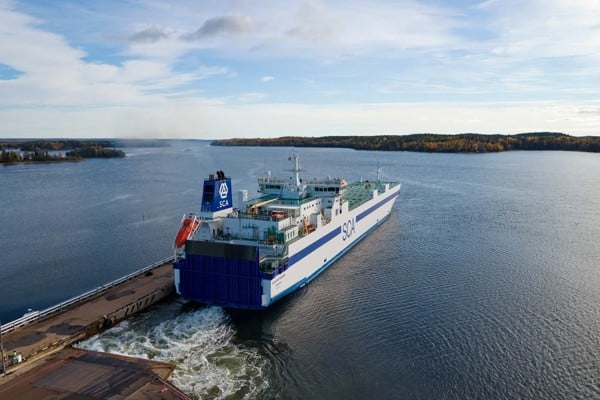
Swedish forest company SCA joins Gasum’s FuelEU Maritime pool for reliable compliance
The credibility and reliability offered by an established company like Gasum were deciding factors in SCA’s decision.
Secure your FuelEU compliance now

FuelEU Maritime compliance requirements explained
FuelEU Maritime is a European Union (EU) regulation established to increase the use of renewable and low-carbon fuels and limit greenhouse gas (GHG) emissions. In 2025, FuelEU Maritime already started to apply to all ships of 5,000 gross tonnage and over calling at EU ports, regardless of their flag. Shipping companies must reduce the carbon intensity of the purchased fuel by 2% in 2025 (GHG emissions and well-to-wake) increasing progressively to as much as 80% by 2050. Companies that fail to meet annual targets face financial penalties and compliance liability.
To facilitate compliance and make compliance easier for shipping companies (DOC holders), FuelEU Maritime permits the voluntary pooling of emissions between vessels. This means that vessels that have over-compliance can reduce the greenhouse gas intensity needed of other vessels, or in other words provide compliance as a service.
How does pooling work?
Emissions can be pooled between two or more ships verified by the same body to achieve compliance per individual ship. This includes ships controlled by different companies. However, pooling is subject to certain conditions. For one, the total pooled compliance must be positive. This means ships cannot have a greater deficit after pooling emissions.
How Gasum's pool works in 3 simple steps:
- Join the Pool: Register your vessels with Gasum’s commercial pool.
- Order: Get the needed amount of compliance units from Gasum quickly and transparently.
- Sail with peace of mind: Continue operations with confidence, knowing you meet all FuelEU Maritime regulation requirements and that compliance is secured and audit-ready.
Frequently asked questions about the FuelEU Maritime Pooling service
Want to learn more about how Gasum's Pooling service works in practice, what the participation requirements are, and how pricing is determined?
Visit the FAQ page to find answers to the most common questions.
Gasum’s commercial pool is uniquely reliable
The commercial pool includes compliance generators, which are LNG-powered vessels that run on bio-LNG from Gasum’s own value chain and close partners. The pool combines these over-compliant vessels and vessels that are under-compliant so that compliance can be shared within the pool.
Companies that are in need of compliance can acquire the required share of the over-compliance within Gasum’s commercial pool with the lowest operational impact and costs.
In addition to connecting over and under compliant vessels, Gasum's pool guarantees the amount of compliance units needed for the pool through Gasum's own biogas portfolio. This is a unique structural advantage, as availability of biofuels, and thus compliance units, is not certain in the coming years.
Gasum’s commercial pool covers all compliance-related risks including balance, availability and regulatory risk, and it enables cost‑effective emission reductions for the maritime sector. Shipping companies can rest assured that their emission reduction requirements are met in an effective and hassle-free way, with predictable costs and a reliable long-term partner.
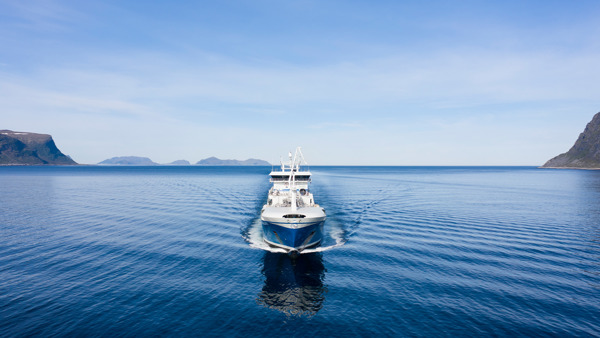
Download our guide - Pioneering cleaner shipping
We have gathered some information for you in a guide about cleaner maritime transports. You will see what influences shipping to reduce emissions, including regulations, market demands and trends.