 Customer portals
 Contact us

Norwegian REMA 1000 cuts emissions from the transport of goods with biogas
As much as 88 percent of REMA Distribution's emissions come from transport. By using liquefied biogas in the transport of goods, the company reduces emissions significantly – while operations remain efficient, robust and cost-effective.
Every day, REMA Distribution transports goods to almost 700 REMA 1000 stores across Norway. Around 270 trucks and semi-trailers are always on the road to ensure that customers find what they need in the stores. At the same time, these transports accounts for most of the company's greenhouse gas emissions.
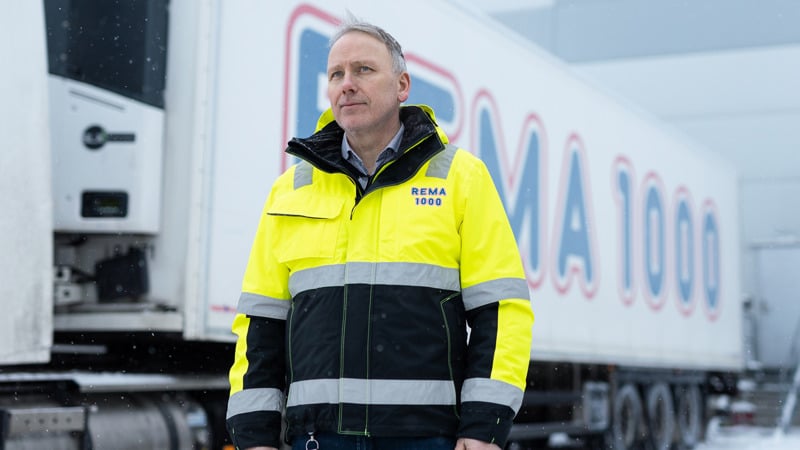
"88 percent of our emissions come from transport. That is why we have set ambitious goals: All our own vehicles will be fossil-free by the end of 2026, and we are working closely with our carriers to ensure that they do the same by 2030 at the latest," says Anders Hustoft, Transport Director at REMA Distribution.
Biogas is a crucial part of the solution
For REMA Distribution, liquefied biogas is a key part of the solution to reduce emissions from heavy transport. Biogas provides the necessary range and reliability and makes it possible to cut emissions on a large scale – without compromising on efficient flow of goods.
Liquefied biogas is particularly suitable for long transport distances and high mileage, which is crucial for deliveries from the distribution boards in Eastern, Southern, Western and Central Norway. In Northern Norway, the infrastructure is currently lacking, but REMA Distribution has great faith that this will also be in place over time.
More measures – with biogas in focus
REMA Distribution is working on several solutions to reduce emissions from transport, including electric vehicles where appropriate. At the same time, biogas is crucial for the company to be able to reduce emissions from the heaviest part of the goods transport.
"Biogas makes it possible for us to reduce emissions significantly, while maintaining the capacity and predictability that our goods transport requires," says Anders.
Circular economy in practice
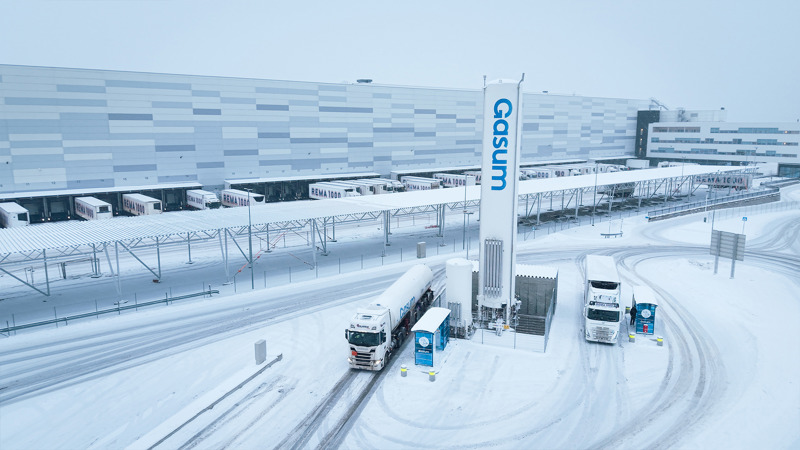
An important element in REMA 1000's biogas initiative is the circular model that has been established in Eastern Norway. Food waste from the REMA 1000 stores is collected, transported to a biogas plant and used to produce biogas. This energy is then delivered back to a biogas station at REMA's distribunal in Vinterbro.
The solution contributes to fewer kilometres driven, more efficient operations and further reduction of emissions – while turning waste into a valuable resource.
Efficient operation – good for the environment and the economy
For REMA 1000, the focus on biogas is also about responsible and robust operations. Biogas contributes to lower emissions, makes it easier for carriers to choose renewable fuels and helps to ensure cost-effective solutions throughout the value chain.
"These are solutions that work in practice. They contribute to both reduced emissions and a more stable operation – and that is crucial for us," Anders concludes.
The biogas initiative is an important step in REMA 1000's long-term work to reduce emissions from goods transport and develop sustainable solutions that work on a large scale.