 Customer portals
 Contact us

FuelEU Maritime - Practical roadmap for compliance
The maritime industry faces its most significant regulatory shift since MARPOL. From 1 January 2025, the FuelEU Maritime Regulation changes how ships buy fuel and manage their operations in European waters.
Executive summary
- FuelEU Maritime entered into force 1 January 2025, requiring ships over 5,000 GT to reduce fuel GHG intensity by 2% (2025–2029)
- Well-to-wake emissions accounting means fuel origin matters as much as consumption
- Pooling offers immediate, low-CAPEX compliance solution – buy compliance units generated by vessels using bio-LNG
- Penalties of approximately EUR 2,400/ton VLSFO equivalent make non-compliance financially untenable
FuelEU Maritime regulations in a nutshell
FuelEU Maritime lets shipowners choose their own path to cleaner fuels, rather than mandating specific technologies. Unlike prescriptive rules, it sets performance standards that allow operators to choose how they meet the requirements.
The regulation applies to all commercial cargo and passenger ships over 5,000 gross tonnage calling at EU/EEA ports, regardless of their flag state. This broad scope ensures no competitive advantage based on vessel registration. A regulatory review planned for 2027 may extend coverage to vessels over 400 GT, signaling the EU's intention to capture an even larger portion of maritime traffic.
The regulation uses a simple formula to determine which voyages it covers. The regulation covers 100% of energy used on intra-EU/EEA voyages and all energy consumed while at berth in EU/EEA ports. For extra-EU voyages (where one port is EU and one is non-EU), 50% of the voyage energy falls under the regulation's scope.
What it covers: The regulation introduces two core mandates:
- GHG Intensity Reduction: Progressive reduction in greenhouse gas intensity of all energy used onboard, measured from well-to-wake
- Zero-Emission Berthing: Container and passenger ships must use onshore power supply (OPS) at major ports from 2030, all equipped ports from 2035
Emissions and compliance requirements
The regulation's innovation lies in its "well-to-wake" (WtW) emissions accounting, replacing the traditional "tank-to-wake" approach. This captures emissions from fuel extraction, production, and transportation (well-to-tank) plus combustion emissions (tank-to-wake).
GHG intensity targets against 2020 baseline (91.16 gCO2e/MJ):
- 2025–2029: -2% (max 89.34 gCO2e/MJ)
- 2030–2034: -6% (max 85.69 gCO2e/MJ)
- 2035–2039: -14.5% (max 77.94 gCO2e/MJ)
- 2040–2044: -31% (max 62.90 gCO2e/MJ)
Fuel certification requirements
All fuels must provide verified well-to-wake emission factors through supplier declarations with third-party verification, mass balance accounting for bio-components, and complete chain of custody documentation. Shipowners now depend on fuel suppliers to provide proper documentation – the fuel's paperwork is now as important as its price. Using non-certified fuels triggers default high emission factors, making compliance virtually impossible and creating severe competitive disadvantage.
Key dates and deadlines
Critical compliance timeline:
- 1 January 2025: Full regulation application begins – start data collection
- 31 January (annually): Submit annual FuelEU report to verifier
- 31 March (annually): Verifier completes assessment and compliance calculation
- 30 April (annually): Declare flexibility strategy (banking, borrowing, pooling)
- 1 May – 30 June (annually): Pay penalties for any remaining deficits
- 30 June (annually): Receive Document of Compliance (mandatory for port operations)
Future milestones:
- 1 January 2030: Onshore power mandatory at major TEN-T ports for container/passenger ships
- 1 January 2035: Onshore power mandatory at all equipped EU/EEA ports
Compliance for 2025-2030
Near-term strategies
The initial 2% reduction target (2025–2029) gives shipowners several affordable ways to meet the rules.
Shipowners must track and record their fuel use by type and source, document all port visits with arrival and departure times, monitor onshore power usage, and verify emission factors for all fuels consumed. This represents a significant upgrade from current MRV reporting requirements.
Immediate fuel options include LNG, which delivers 15–20% GHG reduction versus conventional fuels, and bio-LNG, which provides up to 90% GHG reduction as a drop-in replacement for LNG infrastructure. Low-sulfur biofuels can be mixed with regular marine fuel, letting companies change gradually.
Flexibility mechanisms
Banking: Vessels exceeding compliance targets can carry forward surplus compliance units indefinitely for future use.
Borrowing: Limited borrowing (up to 2% of target) from next year's performance, with 10% penalty and restrictions on consecutive use.
Pooling: The most powerful mechanism – aggregate compliance across multiple vessels, enabling surplus trading between different operators.
How Gasum can help
Pooling as immediate solution: Gasum's Maritime Pooling Service turns a compliance headache into a simple purchase. Companies operating conventional fleets can purchase compliance units generated by vessels using Gasum's bio-LNG, without requiring physical fuel changes or capital investments.
The pooling service delivers multiple advantages. Ships need no modifications or route changes – you keep running your vessels as usual while meeting the rules. Clear pricing in EUR per ton CO2e turns an unknown cost into a predictable expense. Gasum's guaranteed bio-LNG supply security through their production facilities eliminates the risk of biofuel availability shortages that could jeopardize other pooling arrangements. Third-party verification through DNV ensures full regulatory acceptance of purchased compliance units.
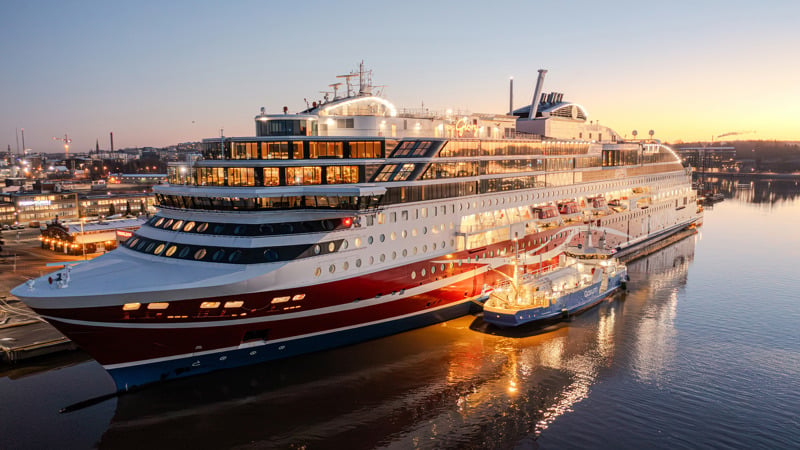
Real-world example: Viking Line vessels using Gasum bio-LNG generate substantial compliance surplus that can offset multiple conventional-fueled vessels in the same pool. Read more >
Renewable fuels of non-biological origin (RFNBOs)
The regulation provides special incentives for RFNBOs (e-fuels like e-methane, e-ammonia, e-methanol):
- 2x multiplier until 2033: Every unit of RFNBO energy counts as double toward compliance targets
- Sunrise clause: If RFNBO usage remains below 1% by 2031, mandatory 2% quota applies from 2034
How Gasum helps with RFNBOs: Gasum plans to offer e-LNG (synthetic methane), protecting today's LNG investments from becoming obsolete. The 2x multiplier makes early RFNBO adoption financially attractive, potentially generating significant compliance surpluses for trading.
Compliance for 2030 and beyond
Escalating requirements
The -6% reduction requirement (2030–2034) marks a significant step-up, making operational efficiencies alone insufficient for most vessels. The transition to low-carbon fuels becomes essential.
Gasum's advanced fuel offerings:
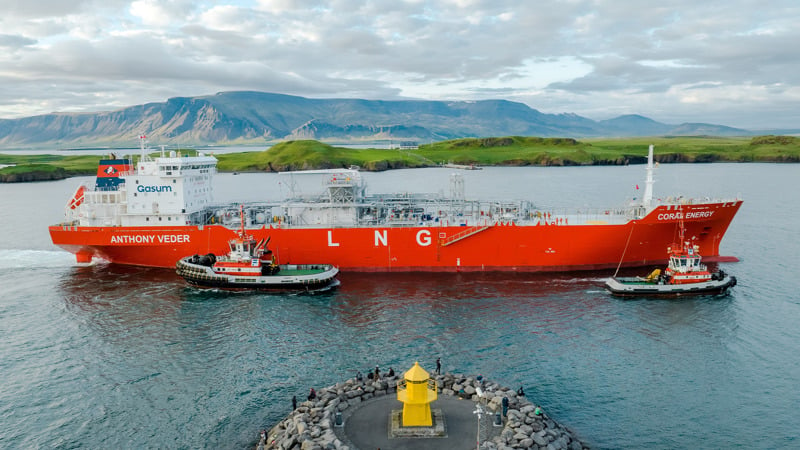
Bio-LNG represents a proven solution delivering immediate deep decarbonization with up to 90% well-to-wake GHG reduction. Its compatibility with existing LNG infrastructure eliminates the need for additional capital investment, while reliable supply from Gasum's own biogas plants and suppliers across Europe provides operational security.
E-LNG provides a long-term answer, with extremely low emissions from production to use when made with renewable electricity. This synthetic fuel benefits from RFNBO incentives until 2033, including the valuable 2x multiplier effect. Gasum's planned e-methane offer ensures supply security for customers making infrastructure investments today.
Strategic planning considerations
When investing in your fleet, consider how long your ships will operate and how regulations will tighten. If you're ordering new ships that will operate for 15+ years, consider dual-fuel engines that can run on both conventional fuel and LNG. This lets you switch to cleaner fuels as they become available and regulations get stricter.
Existing vessels may benefit from dual-fuel retrofit opportunities, particularly if they operate primarily on European routes. Bio-LNG adoption provides immediate payback through compliance surplus generation, potentially offsetting the higher fuel costs through surplus sales.
Choosing the right routes for the right ships becomes crucial under the new rules. Companies should use their LNG-capable vessels on European routes where they earn the most compliance units, while using pooling to balance compliance across different ship types. Operational efficiency measures form the foundation strategy, as reduced fuel consumption directly improves GHG intensity performance regardless of fuel choice.
Taking action: Your compliance roadmap
Immediate steps (Q1 2025):
- Verify FuelEU Monitoring Plan approval and onboard documentation
- Implement data collection systems for fuel consumption and port calls
- Evaluate fleet compliance position using current fuel mix
Short-term strategy (2025–2027):
- Join Gasum's Maritime Pool for instant compliance assurance
- Assess dual-fuel newbuild opportunities for vessels due for replacement
- Pilot bio-LNG use on key European routes to test operational procedures
Long-term preparation (2027–2030):
- Develop newbuild strategy incorporating LNG/bio-LNG capability
- Secure long-term bio-LNG supply agreements
- Prepare for onshore power connection requirements
Conclusion
FuelEU Maritime turns a regulatory requirement into a business advantage. The regulation's flexibility options, particularly pooling, enable immediate compliance while preserving capital for long-term investments.
Success requires three elements:
- Understanding how the rules work
- Developing a strategy for your specific fleet
- Partnering with proven solution providers.
Gasum offers the complete spectrum - from immediate pooling solutions to long-term fuel pathways through bio-LNG and future e-LNG.
The transition begins now. Companies that take action in 2025 will build advantages that grow as the rules get tighter. Those who wait face higher costs and fewer options.
Get in touch with our maritime experts
Contact Gasum's maritime team to assess your fleet's compliance position and explore tailored solutions that turn regulatory obligation into business opportunity.