 Customer portals
 Contact us

EU ETS and FuelEU Maritime: The double dividend of LNG compliance in 2026
How LNG creates compliance value under both EU maritime regulations in 2026 — and why most shipping companies are only capturing half of it.
2026 is the year EU maritime emissions compliance stops being theoretical. EU ETS hits 100% liability and adds methane to the bill. FuelEU Maritime's first penalties land. Two regulations running in parallel, affecting the same vessels and fuel choices — through completely different mechanisms.
Most shipping companies manage them in separate silos: one team handles EUA procurement, another handles FuelEU reporting. That leaves value on the table. LNG creates a compliance advantage under both regulations, but the size of that advantage depends on decisions — engine technology, slip management, fuel sourcing, route allocation — that cut across both frameworks. Companies that understand the interaction are capturing a double dividend. Those that don't are paying more than they need to.
Two regulations, two different mechanisms
EU ETS is tank-to-wake and market-based. It measures what comes out of the stack. Every tonne of CO₂ equivalent emitted requires the purchase of EU Allowances (EUAs) at market prices. From January 2026, scope expands beyond CO₂ to include methane and nitrous oxide for the first time.
Read more: EU ETS for maritime
FuelEU Maritime is well-to-wake and intensity-based. It evaluates the entire fuel lifecycle — upstream production, processing, transport, and combustion. Ships that beat the GHG intensity target (89.34 gCO₂e/MJ for 2025–2029) generate compliance surplus. Ships that miss it face penalties or must resolve the deficit through pooling.
Read more: Pooling services for FuelEU Maritime compliance
Both hit full force in 2026. EU ETS moves to 100% allowance liability (up from 70% in 2025). FuelEU's first compliance settlement cycle plays out, with reports, verification, and penalties all landing in H1 2026 for 2025 performance.
These aren't redundant regulations — they reward different behaviors through different mechanisms. But the fuel and fleet decisions that drive outcomes under both are the same. That's where the opportunity sits.
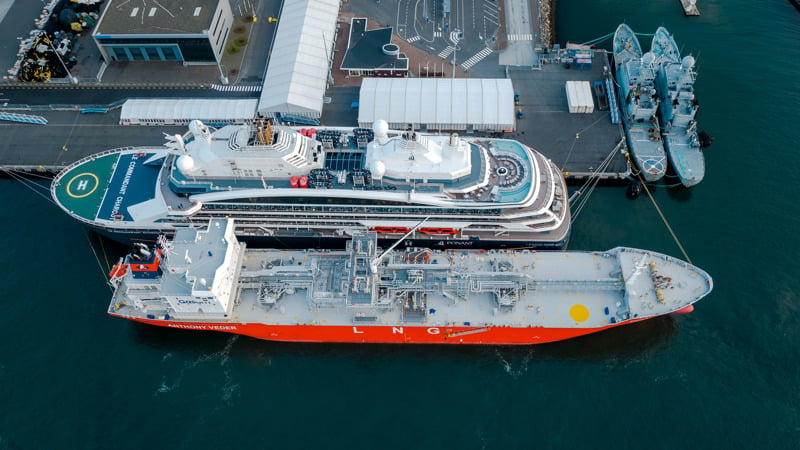
LNG under both lenses — advantaged, but the margin depends on methane
Under EU ETS, LNG has a natural CO₂ advantage over conventional fuels — lower carbon content per unit of energy delivered. Even with methane slip included from 2026, LNG remains cheaper per MWh than MGO or VLSFO in ETS costs. At an EUA price of €75, Gasum's calculations show LNG at roughly €17.60/MWh versus MGO at €21.50/MWh — a saving of nearly €4/MWh even at the worst-case 3.1% default slip factor for medium-speed Otto engines.
But the size of that advantage varies by engine technology. The EU applies default methane slip factors based on engine type:
- High-pressure diesel dual-fuel:2% slip
- Slow-speed Otto dual-fuel:7% slip
- Medium-speed Otto dual-fuel:1% slip
At 3.1%, methane slip accounts for roughly a quarter of total ETS cost. At 0.2%, it's negligible. Engine technology has become a direct financial variable — not just an engineering specification.
Under FuelEU Maritime, LNG's advantage is clearer still. With a well-to-wake intensity typically in the 76–85 gCO₂e/MJ range (depending on engine and upstream pathway), LNG vessels operate well below the 89.34 gCO₂e/MJ target, generating compliance surplus. Conventional fuels — VLSFO, HFO, MGO — sit around 93–94 gCO₂e/MJ, automatically in deficit.
The double dividend: LNG reduces EUA costs under ETS while generating tradeable compliance units under FuelEU. Methane slip is the variable that determines how large each dividend is.
The biggest lever — measuring what you actually emit
Methane slip measurement is the single highest-ROI compliance action for LNG operators in 2026. It widens the advantage under both regulations at once.
Under EU ETS, moving from a 3.1% default to a measured slip of around 1% directly reduces the number of EUAs you need to purchase. For a large vessel consuming 10,000+ tonnes of LNG annually, this can mean hundreds of thousands of euros in annual savings. According to DNV, a large container ship could avoid more than €1 million in annual ETS costs by reporting measured slip instead of defaults.
Under FuelEU, lower measured slip improves your well-to-wake intensity, pushing a vessel from marginal surplus into strong surplus — generating more compliance units to bank or pool.
The EU Commission published guidelines in late 2025 for reporting actual methane slip. The process: onboard measurement at defined engine loads, third-party verification, and a certified slip factor that replaces the default in both ETS and FuelEU calculations. DNV notes that actual slip for some modern Otto-cycle engines runs as low as 0.7–1.0% — well below the regulatory defaults.
The defaults were set conservatively to incentivize measurement. Companies that invest in verification are capturing value that's already there in their engines. Accepting default factors without investigating actual performance is the compliance equivalent of leaving money on the deck.
Bio-LNG — building compliance reserves for when targets tighten
The 2025–2029 FuelEU target (2% intensity reduction) is the gentlest the regulation will ever be. From 2030, it jumps to 6%, then accelerates toward 80% by 2050. The early years are a window: surplus generated now can be banked for future reporting periods when conventional fuels will be deeply in deficit and compliance units scarce and expensive.
Bio-LNG is well suited for this. Under the EU's well-to-wake methodology, manure-based bio-LNG can achieve negative GHG intensity — the RED II framework grants a 45 gCO₂e/MJ credit for avoided emissions from manure management, pushing lifecycle intensity well below zero. A single vessel running on bio-LNG generates far more compliance surplus than it needs — enough to cover multiple conventional ships in the same fleet through FuelEU's pooling mechanism.
Under EU ETS, bio-LNG also delivers. CO₂ emissions are zero-rated for certified biofuels, eliminating the largest component of the ETS bill. One caveat: methane slip still requires EUA purchases even for biogas — but that remaining cost is small relative to the total, and reducible through measurement.
The economics: bio-LNG costs more per tonne than fossil LNG today. But factor in avoided ETS costs, FuelEU surplus value (bankable or sellable via pooling), and the hedge against tightening future targets, and the total cost of compliance can be lower than staying on conventional fuels. Companies securing bio-LNG supply and building pooling positions now are buying compliance at today's mild targets against a regulatory curve that only gets steeper.
Read more: Gasum’s portfolio management helps shipping companies reduce EUA market risks
Pulling it together
The double dividend only works for companies that manage both regulations as one connected strategy — linking fuel choice, engine technology, slip management, route allocation, and FuelEU pooling into a single compliance picture.
Priorities for 2026:
- Measure actual methane slip. Fastest path to savings, highest return — it cuts costs under both regulations.
- Evaluate bio-LNG for FuelEU surplus generation and long-term banking. Compliance units generated now will be worth more as targets tighten.
- Route LNG-capable vessels on intra-EU legs where FuelEU surplus generation is maximized — 100% of energy consumed counts toward FuelEU calculations versus 50% on extra-EU voyages.
The 2% target is manageable. The real question is who will be positioned for 6% in 2030 — and those positions are being built now.
As of March 2026. EU ETS allowance prices, FuelEU pooling prices, and regulatory implementation details are subject to change.
Gasum offers LNG supply, FuelEU pooling and portfolio management services for shipowners operating at European ports. To explore compliance and risk management options for your fleet under EU ETS and FuelEU Maritime, contact Gasum’s maritime team.