 Customer portals
 Contact us

FuelEU Maritime pooling: Bio-LNG powers emission reductions across European shipping
Jani Arala, Commercial Manager, Maritime, Gasum, explores FuelEU Maritime emissions regulations and highlights how the use of bio-LNG and pooling can bring benefits to shipowners and the environment.
The European Union’s FuelEU Maritime regulation is now in force since the beginning of 2025. The aim of the regulation is to cut European maritime greenhouse gas emissions by encouraging renewable and low-carbon fuel use.
The regulation applies to all ships of 5,000 gross tonnage and over calling at EU ports, regardless of their flag. At the end of the year shipowners must show that the carbon intensity of the fuel used during the year has reduced by 2%. The required reduction increases incrementally in time up to 80% by 2050. Non-compliance results in fines based on GHG emissions.
The good news for gas-powered shipowners is, that running ships on LNG mostly covers the needed emission cuts during the first years of the regulation. This is because LNG’s life cycle carbon dioxide emissions are 20 per cent lower than of traditional maritime fuels such as marine gasoil (MGO).
Many other shipowners, however, face concerns about fleet lifespan and compatibility as well as availability of alternative fuels, as supplies and bunker locations are limited.
Luckily, FuelEU Maritime allows shipping companies to voluntarily pool emissions between vessels to support compliance efforts. In this framework, vessels with surplus compliance can offset the greenhouse gas intensity requirements of other vessels by sharing compliance.
Emissions may be pooled among two or more ships verified by the same body, including ships managed by different companies, provided certain conditions are met. One requirement is that the total pooled compliance must remain positive; pooling cannot result in a greater deficit after emissions are combined.
To sum up, pooling enables those shipowners with the ability to reduce emissions to also lower them on behalf of those who are unable. This benefits everyone: compliance generators and off-takers—as well as the climate.
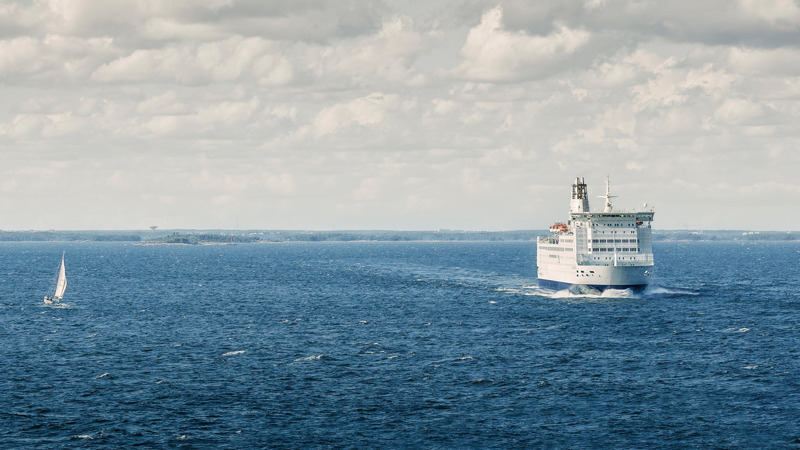
European shipping adapts to FuelEU Maritime rules aimed at cutting greenhouse gas emissions.
Bio-LNG use enables generous emission reductions
Pooling can also be offered as a service. This means that the pool of vessels is managed by a third party that ensures that the pool is in balance and all ships within the pool are allocated the right amount of emission reductions required by the regulation at the end of the year.
One provider of regulation compliance as a service is Nordic energy company Gasum through its FuelEU Maritime pool that is available to all ships calling at EU ports. In Gasum’s pool, designated vessels run on bio-LNG in order to generate compliance on behalf of under compliant vessels.
Gasum has partnered with several Nordic and Baltic shipping companies to use their LNG powered vessels as compliance generators in Gasum’s pool by switching the vessels to using bio-LNG. Gasum’s own carrier and bunkering vessels ensure additional compliance surplus by operating on bio-LNG.
Gasum provides the needed bio-LNG to all compliance generator vessels from its own extensive bio-LNG portfolio. In addition to its own production in a Nordic network of 19 biogas plants, Gasum also sources biogas from European certified producers.
Bio-LNG is a fully renewable fuel, with life-cycle greenhouse gas emissions that are, on average, 90 percent lower compared to traditional fossil fuels, such as marine gasoil. For LNG-powered ships Bio-LNG is a drop-in alternative as it has the same composition as LNG, meaning, that engines can switch over to it directly without any need for technical modifications. It can also be blended with LNG at any ratio.
All bio-LNG produced and acquired by Gasum is made from different types of biodegradable waste and side streams unsuitable for human consumption.
In fact, if the bio-LNG is produced using manure, the emissions can even be negative, as emissions from traditional manure treatment are avoided. Therefore, bio-LNG use generates relatively generous amounts of regulation surplus, when used on regular routes such as those run by Viking Line on the Baltic Sea.
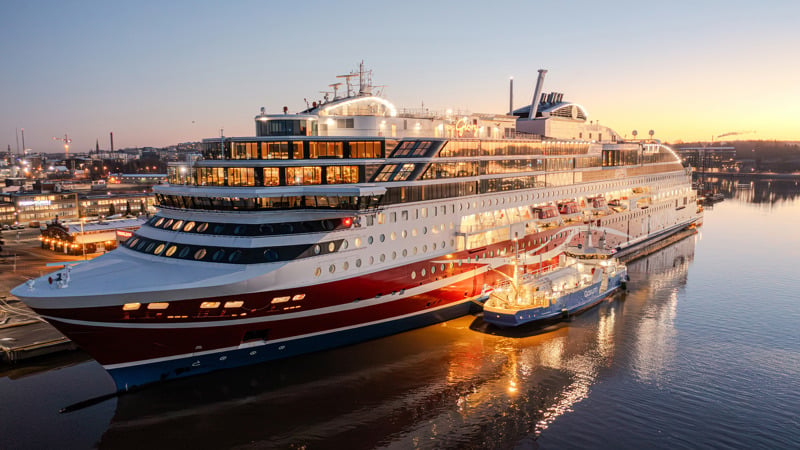
Viking Line operates its ro-ro vessels Viking Glory and Viking Grace on bio-LNG to generate compliance for Gasum’s FuelEU Maritime (FEUM) pooling service.
Transport sector eying limited renewable fuel resources
The FuelEU Maritime package is not the only regulatory development shaking up the maritime sector in the coming years. Although decisions were postponed in October 2025, the International Maritime Organization has its own strategy and ambitious targets for reducing emissions maritime globally with a horizon towards the year 2028 for the first cuts and a net zero emissions target in 2050.
With continuously tightening regulation as well as increasing demand for low-emission transports from end customers, demand for biofuels is set to increase dramatically in the maritime sector in coming years. In addition, aviation and land transport are also vying for globally limited renewable fuel resources.
Combining all these factors together, experts estimate that there might be a significant shortage of biofuels and other alternative fuels from 2030 onwards. Faced with this challenge, Gasum has for some time now been developing a comprehensive biogas value chain and LNG infrastructure to meet the needs of its customers also going forward.
In addition to investments made into biogas production, Gasum has recently announced that it is chartering a new and state-of-the art bunker vessel, set to start bunkering LNG and bio-LNG to customers in 2027. Gasum is also constantly expanding its ship-to-ship bunkering network to increase accessibility throughout North-Western Europe.
Read more: LNG and bio-LNG bunkering services for maritime transport
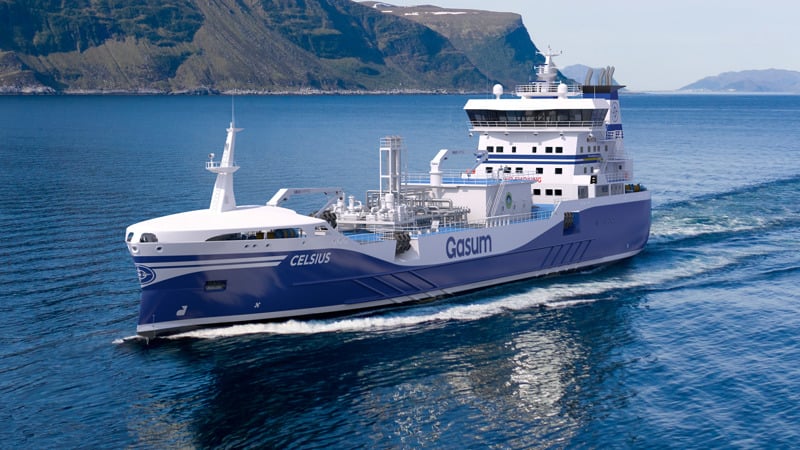
Celsius is Gasum’s next-generation LNG and bio-LNG bunker vessel, designed to meet the growing demand for low-emission maritime fuels in Northwestern Europe.
Peace of mind with secured bio-LNG availability
Although biofuel availability might limit the capacity and scalability of commercial FuelEU Maritime pools, once a shipowner has signed on to Gasum’s pool, peace of mind is guaranteed, as Gasum ensures that customers are always compliant at the end of the verification period, even if this means paying a penalty on behalf of the customer.
Gasum’s is a closed pool where Gasum is the only contractual counterparty to both compliance generators and offtakers respectively and assumes responsibility as well as liability as the pool manager. Gasum guarantees the availability of bio-LNG to the pool.
It also makes sense for shipowners to slightly overestimate their emission reduction needs, as excess compliance can be banked and allocated for the following year.
Gasum’s pool is further verified by leading classification society and advisor DNV. This means that, at the end of the year, DNV verifies the balance of the pool for EU reporting purposes.
Despite the novelty of the regulation, DNV has an advantage in its long experience in similar verification processes. DNV’s role brings an additional layer of reliability and credibility to the pooling service, in addition to the guaranteed availability of bio-LNG.
With FuelEU Maritime now in force, the long journey to decarbonizing the maritime industry has begun with regulation steadily driving the change forward. LNG and bio-LNG have a central role in the implementation of required emission reductions today, as the industry follows what other technologies and low-carbon fuels mature in the near future.
For now, pooling is the right answer for shipping companies wanting an easy and reliable way to fulfil the requirements of the regulation. However, during the course of the next twenty years, as the regulation tightens, ship owners need to think about what their strategy will be to tackle the up to 80 percent reduction in emissions demanded by 2050.
The author of this blog, Jani Arala, works at Gasum as Commercial Manager, Maritime.
Article first published in the December 2025 issue of LNG Industry magazine.